Why Every ADHD Workout Gets Boring After Two Weeks
Quick Answer: The two-week wall is dopamine adaptation, not a willpower failure — build novelty into the plan from day one instead of waiting for boredom to force a switch.
If you’ve started and quit the same workout app four times this year, the problem was never the app.

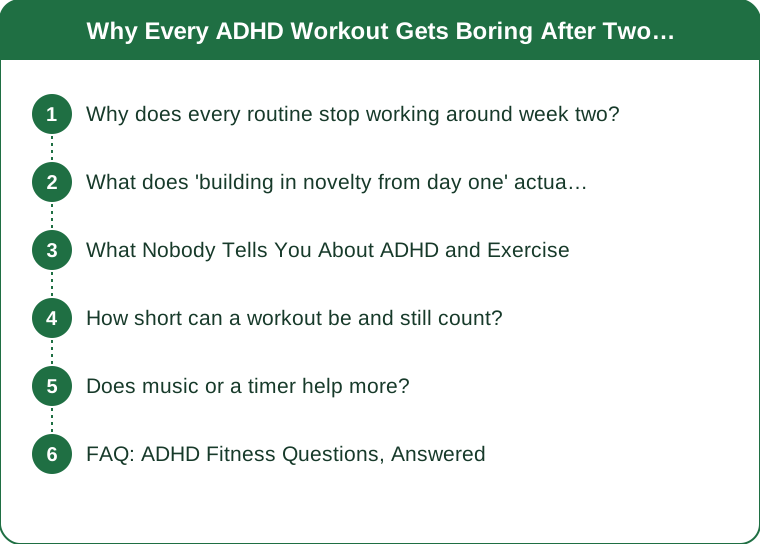
Why does every routine stop working around week two?
Novelty is a real driver of dopamine response, and ADHD brains tend to need more of it, more often, than neurotypical brains. A routine that felt exciting on day one is neurologically old news by day fourteen.
This isn’t a discipline problem — it’s a predictable pattern, which means you can plan around it instead of fighting it.
What does ‘building in novelty from day one’ actually look like?
Instead of picking one workout program, pick three that target the same general goal and rotate between them every session, not every few weeks. The goal stays constant; the format keeps changing.
Example: strength day could rotate between a gym circuit, a YouTube follow-along, and a bodyweight app — same muscle groups, three different sensory experiences.
What Nobody Tells You About ADHD and Exercise
Nobody tells you that finishing a workout matters less than starting one consistently — a messy, incomplete 12-minute session still beats a perfect 45-minute one you skipped entirely.
Nobody tells you that body doubling (working out while on a video call with a friend, even silently) can outperform any app feature for consistency, because it adds real-time social accountability.

How short can a workout be and still count?
Ten minutes counts. The habit of showing up matters more early on than the volume of the session — you can always add time once starting isn’t the hard part anymore.
A lot of ADHD fitness apps fail because they assume a 45-minute block of uninterrupted focus, which is exactly the resource most ADHD days don’t offer.
Does music or a timer help more?
Both work, but for different reasons — music masks the internal narration that pulls focus away, while a visible countdown timer creates urgency that many ADHD brains respond well to.
Try pairing them: a hard-cut playlist where each song change signals a new exercise, so you’re never staring at a static clock.
FAQ: ADHD Fitness Questions, Answered
Should I use the same workout time every day?
A consistent window (like ‘sometime before noon’) works better than a rigid exact time for most ADHD schedules — the flexibility reduces the friction of missing the exact minute.
Is it bad to switch workout apps this often?
No — treat app-switching as a feature of your routine, not a failure of it, as long as you’re still moving regularly.
What if I still skip it most days?
Lower the bar further before adding structure. A 5-minute non-negotiable floor beats an ambitious plan you abandon by week two.
TL;DR:
- The two-week boredom wall is dopamine adaptation, not a discipline problem
- Rotate workout formats every session, not every few weeks
- A finished 10-minute session beats a skipped 45-minute one
- Body doubling and hard-cut music playlists both add structure without rigidity
This is general information, not medical advice — talk to a professional about your specific ADHD presentation.
Keep Reading
This article is for general informational purposes only and is not medical advice. Always consult a qualified health professional for guidance specific to you.