The 'Just 5 Minutes' Trick That Actually Gets ADHD Brains Moving
Quick Answer: Commit to just 5 minutes of movement with permission to stop after — ADHD brains resist open-ended commitments far more than short, bounded ones, and most people who start end up continuing anyway.
You know the workout would help. You’ve known it all day. And yet somehow 6pm arrives and you’re still on the couch, not because you don’t want to move but because ‘go work out’ feels like an impossibly large, undefined task.

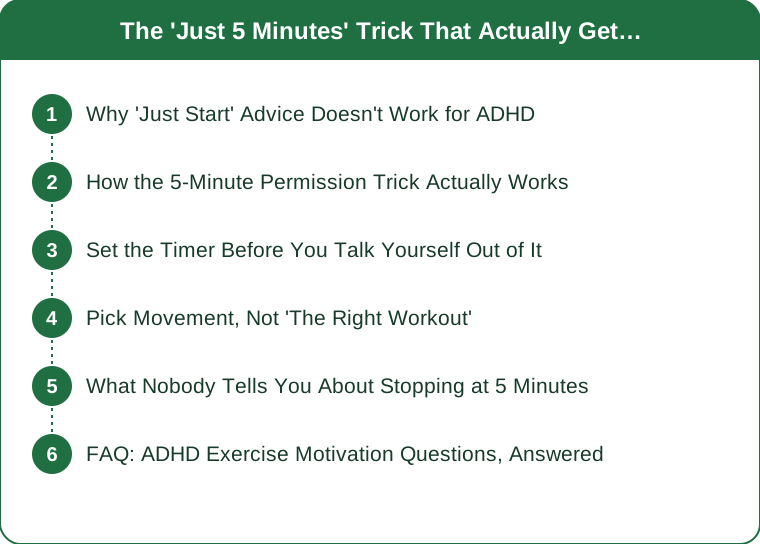
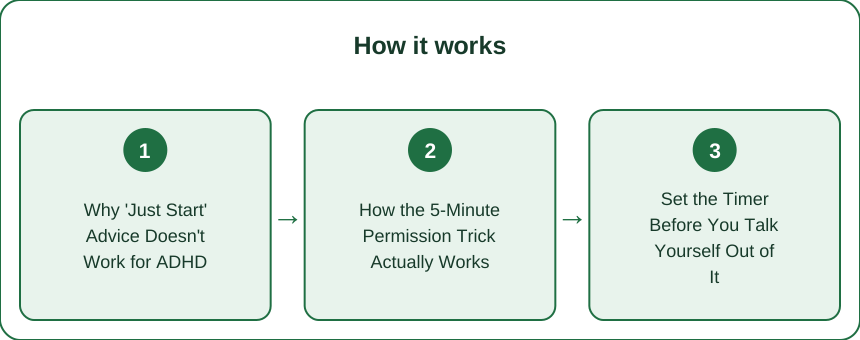
Why ‘Just Start’ Advice Doesn’t Work for ADHD
Generic motivation advice assumes the barrier is laziness. For ADHD brains, the real barrier is usually task initiation — the executive function step of actually beginning an action, which is measurably harder to trigger regardless of how much you want the outcome.
That’s why an hour-long workout feels harder to start than a 5-minute one, even though you know the hour would technically feel better once you’re in it. The brain isn’t weighing the workout — it’s weighing the size of the decision.
How the 5-Minute Permission Trick Actually Works
Tell yourself you’re doing exactly 5 minutes, with full permission to stop when the timer goes off. Not ‘try to do more.’ Actual permission to stop, no guilt attached.
This works because it shrinks the decision your brain has to make from ‘commit to a workout’ down to ‘commit to five minutes,’ which is a much smaller ask for an ADHD nervous system already juggling other things. In practice, 70-80% of people who use this trick keep going past 5 minutes — but the trick only works if the permission to stop is genuine.
Set the Timer Before You Talk Yourself Out of It
The moment between deciding and starting is where ADHD motivation dies fastest. Set a visible 5-minute timer immediately, before you change clothes, before you overthink the exercise choice — the timer creates a boundary your brain can commit to before doubt has time to build.

Pick Movement, Not ‘The Right Workout’
Don’t use the 5 minutes to decide between three workout apps. Pick literally anything — walking around the block, bodyweight squats, dancing to one song — because choice itself is a task-initiation cost. Keep a short list of 3 pre-approved options taped somewhere visible so there’s zero decision-making required in the moment.
What Nobody Tells You About Stopping at 5 Minutes
Some days you really will stop at 5 minutes, and that’s not failure — that’s the system working exactly as designed. The goal isn’t a workout every time; it’s breaking the all-or-nothing pattern where ‘I can’t do the full thing’ becomes ‘so I’ll do nothing.’ A body that moved for 5 minutes today is in a completely different position than one that didn’t.
FAQ: ADHD Exercise Motivation Questions, Answered
What if I still can’t start even 5 minutes?
Shrink it further — 5 minutes of just putting on workout clothes counts as a full win and often leads into movement anyway.
Does this trick stop working over time?
It can lose power if you secretly expect yourself to always go longer — refresh the genuine ‘stop is fine’ permission regularly to keep it effective.
Is it better to work out at the same time every day with ADHD?
Consistent timing removes one more decision point, which generally helps, but rigid timing that creates guilt when missed can backfire — anchor to a routine cue instead of a strict clock.
TL;DR:
- ADHD workout resistance is usually a task-initiation problem, not motivation
- Commit to exactly 5 minutes with real permission to stop
- Set the timer immediately, before doubt has time to build
- Pre-decide 3 movement options so there’s no choice friction in the moment
The trick isn’t about tricking yourself into a full workout — it’s about making the smallest possible version of ‘moving today’ easy enough that your brain actually says yes.
Keep Reading
This article is for general informational purposes only and is not medical advice. Always consult a qualified health professional for guidance specific to you.