The ADHD Workout Cycle: Obsessed for Two Weeks, Then Nothing for Two Months
Quick Answer: The intense-start-then-total-stop pattern is a common ADHD hyperfocus cycle, not a discipline failure — the fix isn’t trying to sustain the initial intensity forever, it’s deliberately building in lower-effort maintenance days before burnout hits.
Week one, you’re unstoppable — daily workouts, meal prep, new gear. Week three, the app hasn’t opened in days and you can’t quite explain why. If this is familiar, you’re describing a documented pattern, not a personal failing.

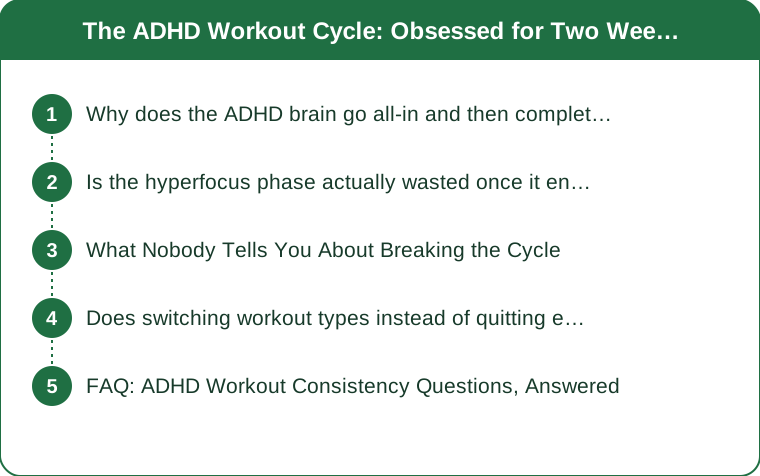
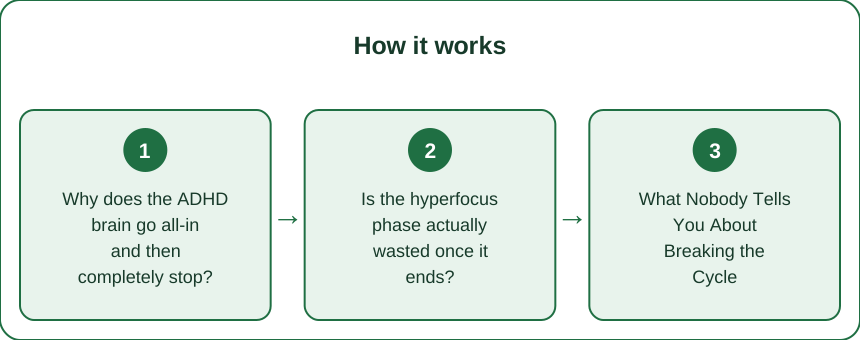
Why does the ADHD brain go all-in and then completely stop?
Hyperfocus is a genuine ADHD trait — an intense, novelty-driven attention state that feels amazing and productive while it lasts, but isn’t sustainable as a baseline because it’s fueled by the newness of the activity, not steady long-term motivation.
Once the novelty fades (often around the 2-3 week mark), the same activity that felt effortless suddenly requires active willpower to continue — and without external structure, that drop-off can feel like total loss of interest rather than a predictable stage.
Is the hyperfocus phase actually wasted once it ends?
No — the hyperfocus phase is genuinely useful for building initial habit momentum and skill, it just can’t be relied on as the ongoing engine. The mistake is expecting that intensity to be the new normal rather than planning for what happens after it fades.
Treating the hyperfocus weeks as a ‘foundation-building phase’ rather than ‘how it’s supposed to always feel’ changes what you expect from yourself once novelty wears off.

What Nobody Tells You About Breaking the Cycle
The common advice to ‘just be more consistent’ misses that consistency itself is the ADHD challenge, not the missing ingredient — what actually works better is deliberately lowering the bar before burnout hits, not after.
Most people wait until they’ve already stopped to plan a comeback. The more effective version: around week two of a new routine, proactively swap some high-effort days for genuinely minimal ones (a 10-minute walk counts) before motivation crashes entirely, so there’s no full stop to recover from.
Does switching workout types instead of quitting entirely help?
Often, yes — novelty-seeking is part of what hyperfocus responds to, so rotating between 2-3 different activity types (rather than forcing the same one daily) can extend engagement longer than sticking rigidly to one format past its novelty window.
Some ADHD-friendly approaches build this in intentionally: strength training some days, a dance class or hike on others, deliberately varying stimulus rather than fighting for consistency within one narrow format.
FAQ: ADHD Workout Consistency Questions, Answered
Is it worth using workout apps with streaks and gamification for ADHD?
Many people with ADHD respond well to gamified structure since it provides external novelty and reward, though effectiveness varies by individual — worth testing.
Should I feel guilty about the two-month gaps?
Guilt tends to make restarting harder, not easier — treating gaps as an expected part of the pattern rather than a failure makes it easier to simply restart without an emotional hurdle.
Does medication change this workout pattern?
Some people report medication helps sustain consistency beyond the hyperfocus window, but it varies significantly by individual — this is worth discussing with a prescribing provider if it’s a persistent barrier.
TL;DR:
- The intense-start-then-stop pattern is a recognized ADHD hyperfocus cycle, not a discipline failure
- The hyperfocus phase is useful for building momentum but isn’t sustainable as an ongoing baseline
- Proactively lower the bar around week two, before burnout hits, not after
- Rotating between workout types can extend engagement past the novelty window
The cycle isn’t a flaw to fix — it’s a pattern to plan around, and planning for it beats fighting it every time.
Keep Reading
This article is for general informational purposes only and is not medical advice. Always consult a qualified health professional for guidance specific to you.