The ADHD Workout Mistake That Kills Motivation Right at Week 2
Quick Answer: The week-2 crash usually happens because the routine was built entirely on novelty-driven dopamine, and once the newness fades, there’s no other reason to show up. The fix is building in a second motivator — structure or reward — before novelty runs out, not after.
Week 1 felt amazing. New app, new playlist, new routine, and your brain was fully on board. Week 2, the exact same plan feels like pulling teeth. That’s not a willpower problem. It’s a predictable dopamine curve, and it’s fixable before it happens again.

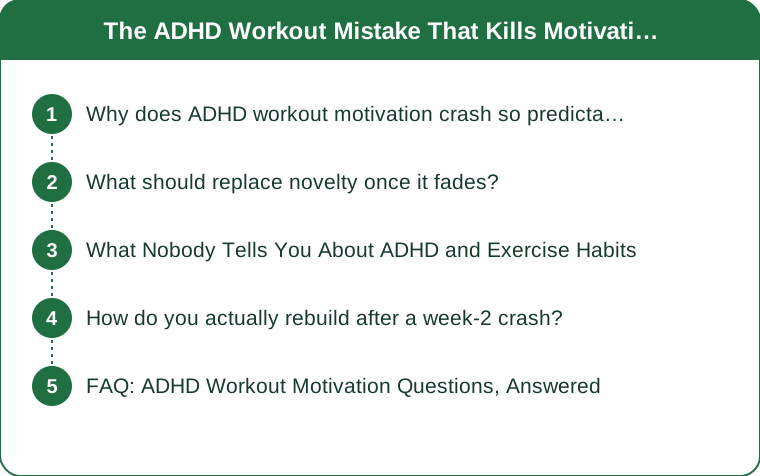
Why does ADHD workout motivation crash so predictably at week 2?
Novelty is a strong, fast dopamine source for an ADHD brain — but it’s also a short one, typically lasting roughly 7-14 days before it flattens out. If novelty was the entire engine, the engine runs out right on schedule.
This isn’t a motivation deficit. It’s a single-fuel-source problem: one dopamine input doing all the work with nothing built in to replace it.
What should replace novelty once it fades?
Two backups work well: structure (a fixed time and place that removes the daily decision entirely) and immediate reward (something enjoyable stacked right after the workout, not weeks later at a fitness goal).
Structure wins for hyperfocus-prone people because it bypasses the ‘do I feel like it’ question. Reward wins for people who need a dopamine hit now — a favorite show, a specific coffee, a text to a friend, all reserved for right after.

What Nobody Tells You About ADHD and Exercise Habits
Here’s the part most fitness advice skips: habit-stacking takes ADHD brains roughly 2-3x longer to automate than neurotypical estimates suggest — closer to 10+ weeks than the commonly cited 21 days.
That means the week-2 dip isn’t failure, it’s the expected middle of a much longer curve. Knowing that changes what quitting at week 2 actually means: not ‘this doesn’t work for me,’ but ‘I’m exactly on schedule for the hard part.‘
How do you actually rebuild after a week-2 crash?
Don’t restart with a new plan — that just resets the novelty clock. Instead, keep the same activity but change one variable: new time slot, new location, or a body-doubling partner. Small enough to not trigger a full restart, different enough to nudge fresh interest.
Pair it immediately with one fixed reward. Two weeks of that combination usually outlasts the original novelty-only crash.
FAQ: ADHD Workout Motivation Questions, Answered
Is it normal to need a completely new workout every few weeks?
Common, yes — but rotating the activity while keeping the time and reward fixed works better than restarting the whole system each time.
Does medication change the week-2 pattern?
It can extend the window, since stimulant medication supports sustained dopamine differently — but the structure-plus-reward fix still matters regardless of medication status.
How long before a workout habit stops feeling like effort?
Expect somewhere in the 8-12 week range for it to feel closer to automatic — plan for that timeline rather than judging by week 2 or 3.
TL;DR:
- The week-2 crash happens when novelty (a short dopamine source) is the only motivator
- Add structure (fixed time/place) or immediate reward (right after, not at a distant goal)
- ADHD habit automation realistically takes 8-12 weeks, not 21 days — week 2 is the expected hard part
- Change one variable instead of restarting the whole plan when motivation dips
Pick one reward you’ll actually look forward to, and stack it right after your next session.
Keep Reading
This article is for general informational purposes only and is not medical advice. Always consult a qualified health professional for guidance specific to you.