Why You Keep Ignoring Your Own Workout Reminders (And What Actually Gets Through)
Quick Answer: Repetitive, identical notifications trigger habituation fast in ADHD brains, so the same daily 6pm alarm stops registering within a week or two. Varying the message, sound, or trigger — rather than the time — keeps reminders effective longer.
You set the reminder with good intentions. A week later it’s just another notification you swipe away without reading, the same way you stopped noticing the hum of a refrigerator.

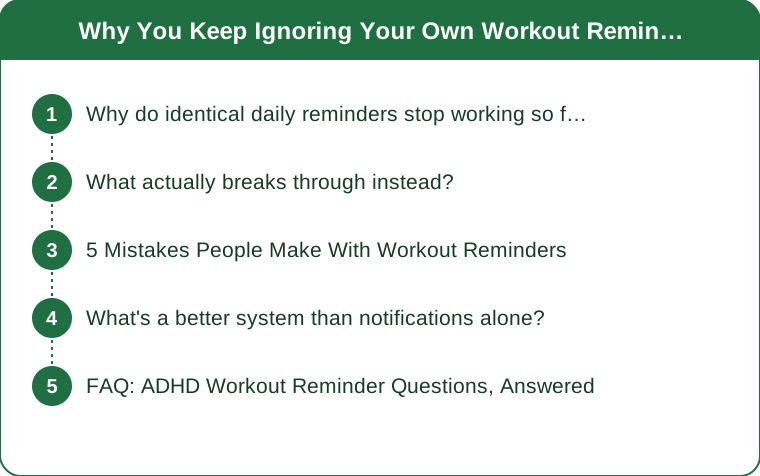
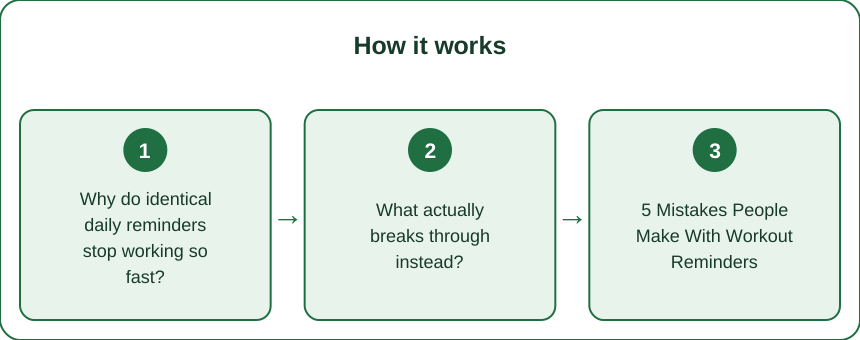
Why do identical daily reminders stop working so fast?
This is habituation — a brain’s natural tendency to stop responding to a repeated, unchanging stimulus. ADHD brains, which already lean on novelty for engagement, habituate to sameness even faster than average.
The notification isn’t failing because you’re undisciplined. It’s failing because it’s the same signal your brain has already learned to filter out.
What actually breaks through instead?
Vary the message text every few days instead of reusing the same line — ‘time to move’ hits differently than ‘you said your future self would thank you.’ Change the sound or vibration pattern periodically. Attach the reminder to an action, not just a time — ‘after I put the kettle on’ instead of ‘6:00 PM.’
Novelty in the reminder itself, not just the workout, is what re-engages attention.

5 Mistakes People Make With Workout Reminders
1. Using the phone’s default alarm tone, which is instantly filtered as background noise.
2. Setting it for a fixed clock time instead of anchoring it to something that already happens daily.
3. One reminder, no backup. A single alert is easy to dismiss reflexively without reading.
4. Vague text like ‘workout’ with no specific next action attached.
5. Never updating the reminder after the first month, even once it’s clearly stopped working.
What’s a better system than notifications alone?
Pair a reminder with a visible physical object — shoes by the door, a mat already unrolled — so there are two cues instead of one digital ping easy to swipe past. Physical cues don’t suffer from notification fatigue the way phone alerts do.
Some people also do better switching from reminders to a fixed anchor habit (always right after coffee) rather than a clock-based system entirely.
FAQ: ADHD Workout Reminder Questions, Answered
How often should reminder text or sound be changed to stay effective?
Every 1-2 weeks is a reasonable rhythm — often enough to avoid habituation, not so often it becomes its own chore to manage.
Do habit-stacking anchors work better than time-based alarms for everyone with ADHD?
Many people find anchors more reliable since they’re tied to something already happening, but it varies — some people do better with a loud, unpredictable alarm instead.
Is it normal to need to redesign the reminder system every few months?
Yes — this isn’t a sign the system failed, it’s expected maintenance, similar to how a workout routine itself often needs periodic variation.
TL;DR:
- Identical daily reminders trigger habituation and get filtered out within 1-2 weeks
- Vary the message, sound, or trigger rather than relying on a fixed clock time
- Anchor reminders to an existing action instead of a time of day
- Pair digital reminders with a visible physical cue for backup
The reminder didn’t fail you — it just went stale. Refreshing it is normal maintenance, not a discipline problem.
Keep Reading
This article is for general informational purposes only and is not medical advice. Always consult a qualified health professional for guidance specific to you.