Why 'Just Motivate Yourself' Doesn't Work for ADHD Workouts — and What Does
Quick Answer: ADHD brains respond to novelty, immediate reward, and low-friction starts — not discipline. Stack a workout right after something already dopamine-rich (music, a show, a friend), and shrink the starting task to under 2 minutes.
You’ve read the “just get your shoes on” advice a hundred times, and it works for exactly nobody with ADHD who’s tried it while their brain is somewhere else entirely. The problem was never motivation — it’s that ADHD motivation runs on a different fuel.

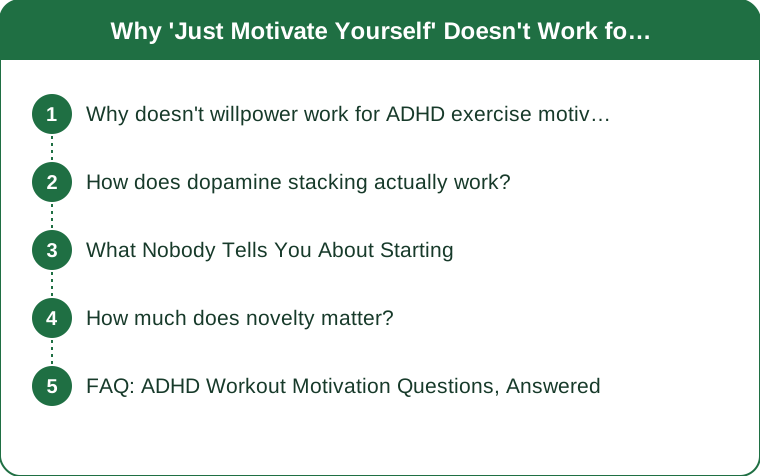
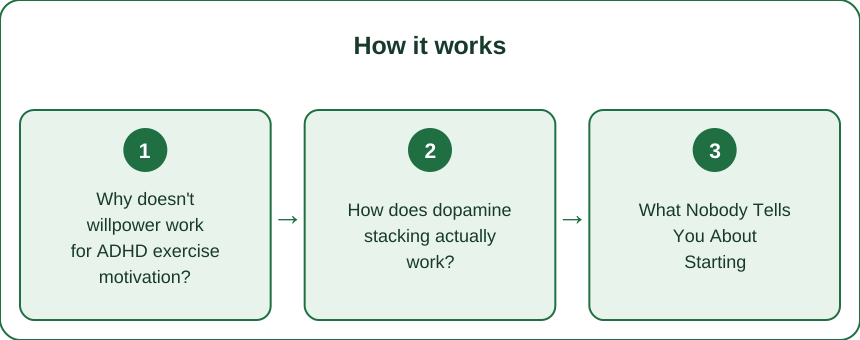
Why doesn’t willpower work for ADHD exercise motivation?
Because ADHD brains have documented differences in dopamine regulation, and dopamine — not discipline — is the chemical that makes a task feel worth starting. “Try harder” asks you to override a wiring difference with effort, which works for a day or two and then burns out completely.
The workaround isn’t more willpower. It’s designing the before moment so the brain doesn’t need willpower to begin.
How does dopamine stacking actually work?
Attach the workout to something already dopamine-rich: your favorite playlist that’s only allowed during workouts, a podcast you’re mid-episode on, or a workout buddy who texts “here now.” The reward front-loads onto the start instead of waiting at the finish line.
The key rule: the fun thing has to be exclusive to the workout — if you can get the podcast anytime, it stops working as a hook within a week.

What Nobody Tells You About Starting
The 2-minute rule beats every other trick: commit to just putting on shoes and walking to the end of the driveway. Nothing more. Most of the time your brain, once moving, keeps going — but the deal only works if quitting after 2 minutes is genuinely allowed, no guilt attached.
ADHD brains often reject tasks but accept experiments — reframing “go work out” as “test if 2 minutes feels okay today” removes the resistance that a full commitment triggers.
How much does novelty matter?
More than most fitness advice admits. Doing the identical routine every day is a recipe for ADHD boredom shutdown by week 3. Rotate between 3-4 different activities weekly, change the location occasionally, or reorder the same exercises — the brain treats each variation as new enough to stay interested.
FAQ: ADHD Workout Motivation Questions, Answered
Why do I lose interest in workouts so fast with ADHD?
Novelty-seeking is common with ADHD, and repetitive routines lose their dopamine hit quickly. Rotating activities, not forcing consistency through one method, usually solves this.
Does exercise actually help ADHD symptoms?
Regular movement is associated with improved focus and mood regulation in ADHD research, functioning similarly to a mild, natural dopamine boost — but it’s a support, not a replacement for other treatment.
What if I can’t even get past the ‘putting on shoes’ step?
Shrink it further — put the shoes by the door the night before so the only decision left is putting your feet in them. Removing decisions removes friction points where ADHD brains stall.
TL;DR:
- ADHD motivation runs on dopamine and novelty, not willpower
- Stack workouts onto something already rewarding — make it exclusive to exercise
- Use the 2-minute rule: shoes on, walk to the driveway, quitting is allowed
- Rotate activities every few weeks to avoid the boredom shutdown
Design around the brain you have, not the discipline you wish you had.
Keep Reading
This article is for general informational purposes only and is not medical advice. Always consult a qualified health professional for guidance specific to you.