Why Exercise Is Almost a Prescription for ADHD Brains: The Dopamine Connection
Exercise does for the ADHD brain something close to what the medication does — nudge the dopamine and norepinephrine that attention runs on — which is why movement isn’t just healthy here, it’s functional. The exercise-ADHD guide: the neuroscience, the best types and the timing.

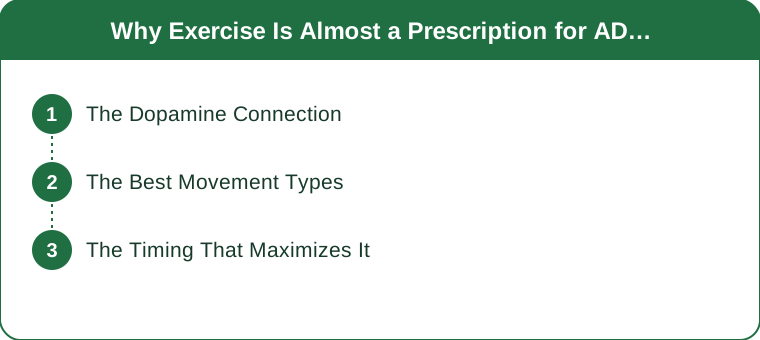
The Dopamine Connection
Why movement helps the ADHD brain specifically: the neurotransmitter mechanism (exercise acutely raises dopamine and norepinephrine — the same systems ADHD medications target; the movement-as-modulation framing that researchers use), the focus window (the post-exercise hours showing improved attention and executive function in studies — the workout as a cognitive primer, not just a mood-lift), the restlessness outlet (the physical energy that fidgets and paces given a productive channel — the body-need met so the mind can settle), and the honest scope (exercise as a powerful COMPLEMENT to whatever treatment plan exists — the adjunct-not-replacement clarity from the friendly-fitness doctrine; the doctor conversation owning the treatment, movement supporting it).

The Best Movement Types
What works for the wiring: the aerobic tier (the running, cycling and dance that spike the focus neurotransmitters — the cardio with the strongest attention research), the skill-and-complexity bonus (the martial arts, dance and sport that demand coordination AND cardio — the engaged brain that plain treadmills bore; the novelty that ADHD brains crave working FOR you), the strength-training layer (the resistance work’s mood-and-focus benefits — the structure of a program serving the executive-function gap), the outdoor multiplier (the green-exercise attention-restoration stacking on the movement effect — the trail that doubles the dose), and the anti-boredom design (the variety, music and gamification that keep ADHD adherence — the workout that’s interesting being the workout that repeats, per the whole friendly-fitness thesis).
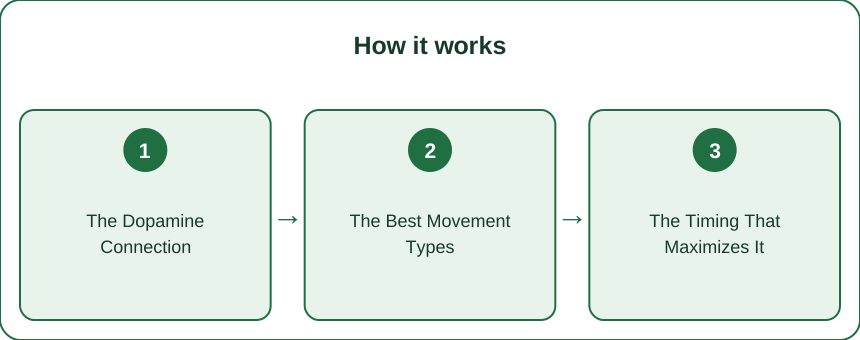
The Timing That Maximizes It
When to move for the payoff: the morning-primer slot (the before-work or before-study session that opens the focus window for the demanding hours — the movement-as-medication timing), the pre-hard-task tool (the ten-minute movement snack before the dreaded task — the activation that starts the initiation ADHD stalls on; the walk-then-work protocol), the afternoon-slump rescue (the movement break when focus crashes — the reset that beats the third coffee), the body-doubling combo (the exercise paired with accountability from the body-doubling chapter — the two ADHD tools stacked), and the consistency-over-perfection frame (the something-daily that keeps the neurochemistry topped up — the missed-day forgiveness that prevents the shame spiral; the ADHD-friendly bar set at sustainable). Move to focus, morning primes best, complexity engages: the brain, exercised on purpose.
Exercise raises the dopamine and norepinephrine ADHD brains run short on — aerobic and skill-based movement, timed before demanding hours, opens a real focus window. A powerful complement to your treatment, never a replacement.
Keep Reading
This article is for general informational purposes only and is not medical advice. Always consult a qualified health professional for guidance specific to you.