How to Build an Exercise Habit With ADHD (Work With Your Brain)
For ADHD brains, the usual habit advice often falls flat — routine and repetition can feel impossible, while novelty and fun are motivating. The trick is to work with your brain, not against it. Here is why exercise habits are hard with ADHD, strategies that actually work, and how to be kind to yourself.

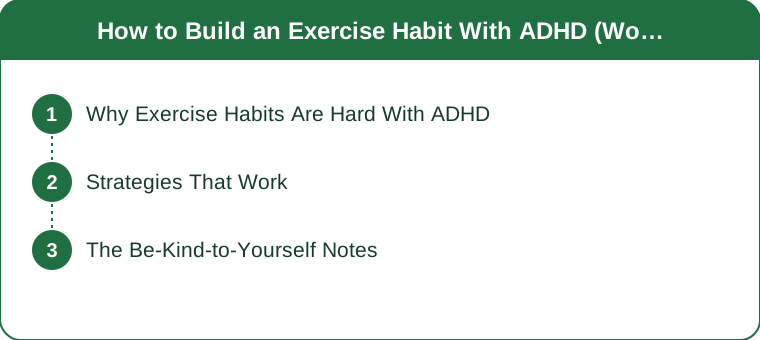
Why Exercise Habits Are Hard With ADHD
Working against the grain: the the-routine-feels-hard (the routine and repetition feeling hard for ADHD brains from the friendly logic — the routine-feels-hard), the the-novelty-motivates (the novelty and variety being motivating instead from the friendly logic — the novelty-motivates), the the-boredom-kills-consistency (the boredom quickly killing consistency from the friendly logic — the boredom-kills), the the-usual-advice-falls-flat (the standard habit advice often not working from the friendly logic — the usual-advice-flat), the the-work-with-your-brain (the working with your ADHD brain being the key from the friendly logic — the work-with-your-brain), and the reframe (the exercise habits as hard with ADHD because routine feels impossible while novelty motivates — the trick is to work with your brain, not against it).

Strategies That Work
ADHD-friendly strategies: the the-make-it-fun (the choosing fun, engaging exercise you enjoy from the friendly logic — the make-it-fun), the the-add-novelty-and-variety (the adding variety to fight boredom from the friendly logic — the novelty-variety), the the-body-doubling (the working out with others for accountability from the friendly logic — the body-doubling), the the-lower-the-barrier (the lowering the barrier to just start from the friendly logic — the lower-barrier), the the-immediate-rewards (the building in immediate rewards and enjoyment from the friendly logic — the immediate-rewards), the the-habit-stacking-and-cues (the anchoring exercise to cues and existing habits from the friendly logic — the stacking-and-cues), the the-short-engaging-sessions (the short, engaging sessions over long boring ones from the friendly logic — the short-engaging), and the the-follow-your-interest (the following what genuinely interests you from the friendly logic — the follow-interest).
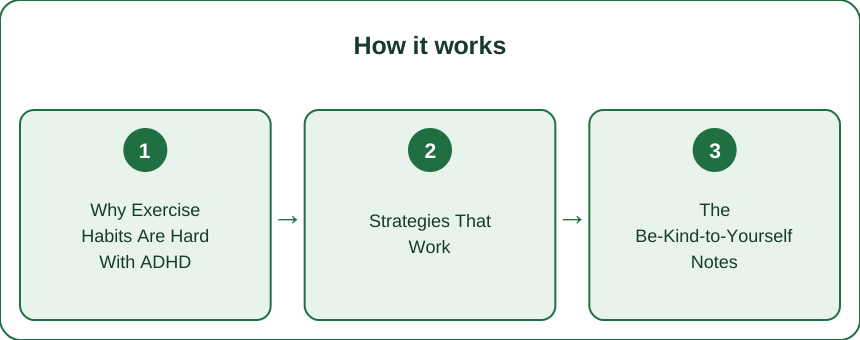
The Be-Kind-to-Yourself Notes
Self-compassion with ADHD: the the-forgive-missed-days (the resuming without guilt after missed days from the friendly logic — the forgive-missed-days), the the-consistency-not-perfection (the consistency over perfection from the friendly logic — the consistency-not-perfection), the the-work-with-not-against-your-brain (the working with your brain, not shaming it from the friendly logic — the work-not-against), the the-switch-it-up-when-bored (the switching activities when boredom hits from the friendly logic — the switch-when-bored), the the-celebrate-showing-up (the celebrating every session you do from the friendly logic — the celebrate-showing-up), the the-any-movement-counts (the any movement counting, however small from the friendly logic — the any-movement-counts), the the-be-patient-with-yourself (the being patient and kind with yourself from the friendly logic — the be-patient), and the frame (the exercise habit with ADHD as working with your brain — fun, novelty, body-doubling and low barriers, with self-compassion for missed days — work with your brain, not against it. Make it fun, add novelty, lower the barrier, switch it up when bored, and forgive missed days).
For ADHD brains, the usual habit advice often falls flat — routine and repetition can feel impossible, while novelty and fun are motivating; the trick is to work with your brain, not against it. Exercise habits are hard with ADHD because routine feels hard, novelty motivates, boredom kills consistency, usual advice falls flat, and you need to work with your brain. Strategies that work: make it fun, add novelty and variety, body-doubling, lower the barrier, immediate rewards, habit stacking and cues, short engaging sessions, and following your interest. Be kind to yourself by forgiving missed days, favoring consistency over perfection, working with not against your brain, switching it up when bored, celebrating showing up, knowing any movement counts, and being patient. Work with your brain, not against it.
Keep Reading
This article is for general informational purposes only and is not medical advice. Always consult a qualified health professional for guidance specific to you.