ADHD and Choosing the Right Workout (Match the Activity to Your Brain)
With ADHD, the question is not whether you can exercise — it is whether you picked something your brain will still want to do in three weeks. The activity choice does more work here than discipline ever will. Here is why the choice matters so much, what tends to work, and how to test it.

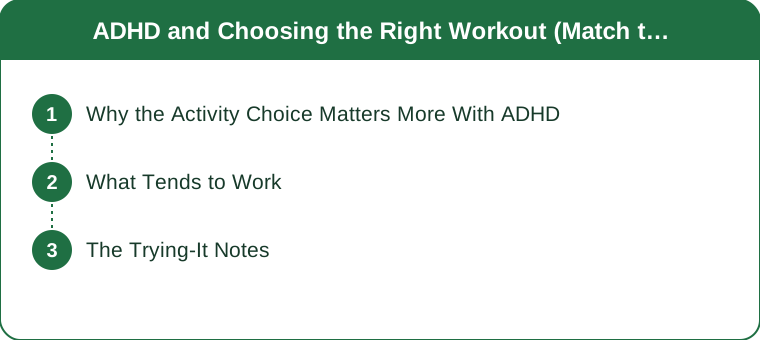
Why the Activity Choice Matters More With ADHD
Choice over discipline: the the-boredom-ends-it (the boredom ending an activity faster than any other factor from the consistency logic — the boredom-ends-it), the the-discipline-is-not-the-lever (the discipline being the wrong lever to pull from the friendly-fitness logic — the discipline-is-not-the-lever), the the-engagement-sustains-it (the genuine engagement being what sustains the habit from the focus-dopamine logic — the engagement-sustains), the the-the-wrong-choice-wastes-months (the a poorly matched activity costing months of stop-start from the consistency logic — the wrong-choice-costs), the the-novelty-and-stimulation-help (the novelty and stimulation being genuinely motivating from the friendly-fitness logic — the novelty-helps), and the reframe (the ADHD exercise question as an activity-choice problem — because the right activity does more work than discipline ever will).

What Tends to Work
Activities that hold attention: the the-varied-and-changing-workouts (the workouts that vary session to session from the friendly-fitness logic — the varied-workouts), the the-skill-based-activities (the skill-based activities giving something to learn from the focus-dopamine logic — the skill-based), the the-classes-with-external-structure (the classes providing external structure and pacing from the body-doubling logic — the external-structure), the the-social-or-body-doubled-training (the training with someone for accountability from the body-doubling logic — the body-doubling), the the-music-driven-movement (the music-led activities like dance from the focus-dopamine logic — the music-driven), the the-short-intense-sessions (the shorter, intense sessions over long slow ones from the consistency logic — the short-and-intense), the the-outdoor-and-changing-environments (the changing environments keeping it stimulating from the morning-movement logic — the changing-environments), and the the-immediate-feedback-activities (the activities with visible immediate feedback from the focus-dopamine logic — the immediate-feedback).
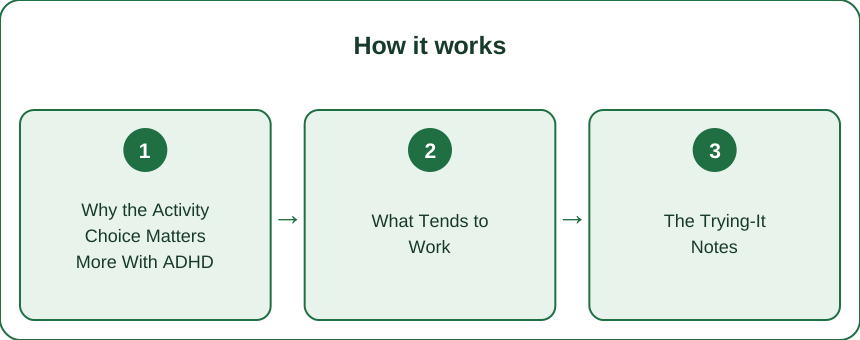
The Trying-It Notes
Testing the match: the the-give-it-three-weeks (the judging an activity after about three weeks from the consistency logic — the three-week-test), the the-notice-the-dread (the noticing dread as the honest signal to switch from the consistency logic — the notice-the-dread), the the-switch-without-guilt (the switching activities without treating it as failure from the friendly-fitness logic — the switch-without-guilt), the the-keep-a-rotation (the rotating two or three activities rather than one from the friendly-fitness logic — the keep-a-rotation), the the-lower-the-entry-barrier (the making starting as frictionless as possible from the habit logic — the low-barrier), the the-stack-it-onto-a-cue (the anchoring it to an existing daily cue from the morning-movement logic — the anchor-to-cue), the the-any-movement-counts (the any movement counting while you search from the friendly-fitness logic — the any-movement-counts), and the frame (the ADHD workout choice as matching the activity to your brain — varied, skill-based, socially structured or music-driven — tested over three weeks and switched without guilt — match the activity to your brain. Choose varied, skill-based or socially structured activities, give each three weeks, and switch without guilt when dread sets in).
With ADHD, the question is not whether you can exercise — it is whether you picked something your brain will still want to do in three weeks; the activity choice does more work here than discipline ever will. The choice matters because boredom ends it, discipline is not the lever, engagement sustains it, the wrong choice wastes months, and novelty and stimulation help. What tends to work: varied and changing workouts, skill-based activities, classes with external structure, social or body-doubled training, music-driven movement, short intense sessions, outdoor and changing environments, and activities with immediate feedback. Test the match by giving it three weeks, noticing the dread, switching without guilt, keeping a rotation, lowering the entry barrier, stacking it onto a cue, and remembering any movement counts. Match the activity to your brain.
Keep Reading
This article is for general informational purposes only and is not medical advice. Always consult a qualified health professional for guidance specific to you.