The ADHD Fitness Guide: Workouts That Work With Your Brain
Standard fitness advice — pick a program, stay consistent, be patient — is practically engineered to fail ADHD brains, and then blame them for it. The ADHD-friendly approach flips the script: novelty as a feature, dopamine as the compass, systems over willpower. (Info; not medical advice.)

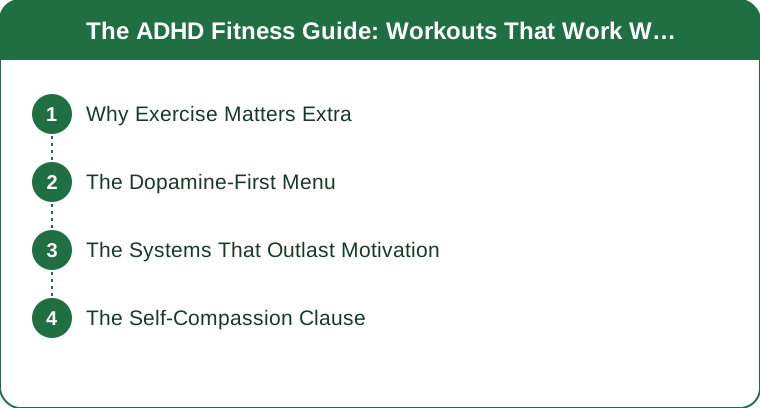
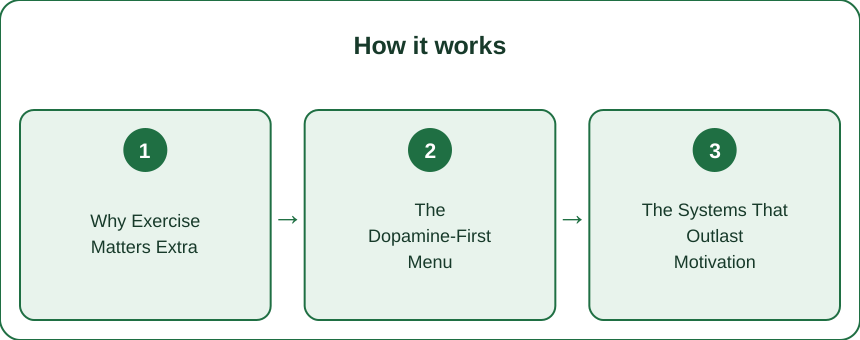
Why Exercise Matters Extra
The double dividend: exercise is one of the best-evidenced non-medication supports for ADHD symptoms (the research on attention, mood and executive function post-exercise is consistent — movement acts on the same dopamine-and-norepinephrine systems the condition involves), and the effect is same-day (the post-workout focus window is real and schedulable — many adults with ADHD deliberately train before their hardest cognitive work). Exercise isn’t just health; it’s symptom management that happens to build muscle.
The Dopamine-First Menu
Workouts that feed the interest system: the novelty-friendly formats (class variety passes, the boutique-studio rotation, the new-program-every-month approach — the standard advice calls it program-hopping; for ADHD brains it’s sustainable design), the inherently stimulating sports (martial arts, dance, climbing, team sports — complexity and external pacing hold attention that treadmills lose in minutes; the muay-thai and salsa worlds are full of ADHD success stories), the gamified tier (VR fitness and its streak mechanics — the dopamine loop working FOR the workout), and the music lever (the workout-playlist science hits differently when the brain runs on stimulation).

The Systems That Outlast Motivation
The executive-function workarounds: shrink the transition (the friction between deciding and doing is where ADHD workouts die — clothes laid out, bag packed, the shortest possible path; the lazy-girl barrier-audit is neurodivergent-essential design), body-double it (the workout buddy, the class booking, the personal-trainer appointment — external structure replaces internal initiation), the two-minute entry rule (start absurdly small; the started workout usually continues — starting was the disorder-taxed step), and time-anchor everything (the same trigger daily beats the same time daily — after-coffee, after-drop-off; events outrank clocks).
The Self-Compassion Clause
The mindset that sustains it: the consistency redefinition (returning after a two-week gap IS consistency for ADHD — the restart speed matters, not the streak; the all-or-nothing frame is the actual enemy), the interest-cycling acceptance (loving spin for three months, then climbing, then dance is a fitness LIFE, not a failure of commitment — the rotating passions all count), and the tracking choice (some thrive on streak apps; others find them shame machines — pick the tool that motivates YOUR brain and fire the rest). The fitness industry sells discipline; ADHD fitness runs on design — and design, unlike willpower, doesn’t run out by Thursday.
Novelty is a feature, shrink the transition, body-double, restart fast. ADHD fitness isn’t standard advice tried harder — it’s a different operating system, and it works.
Keep Reading
This article is for general informational purposes only and is not medical advice. Always consult a qualified health professional for guidance specific to you.